
Build a Better Bowl
How to Switch Your Dog or Cat to Raw Food
Feeding better doesn’t have to be complicated.
Whether you feed raw, kibble, or both, ADR Pet Stores make it simple to choose products that fit your pet’s needs, budget, and lifestyle.
From starter packs and meal plans to nutritional consultations, we’re here to help every step of the way.
Benefits of Raw Feeding for Dogs and Cats
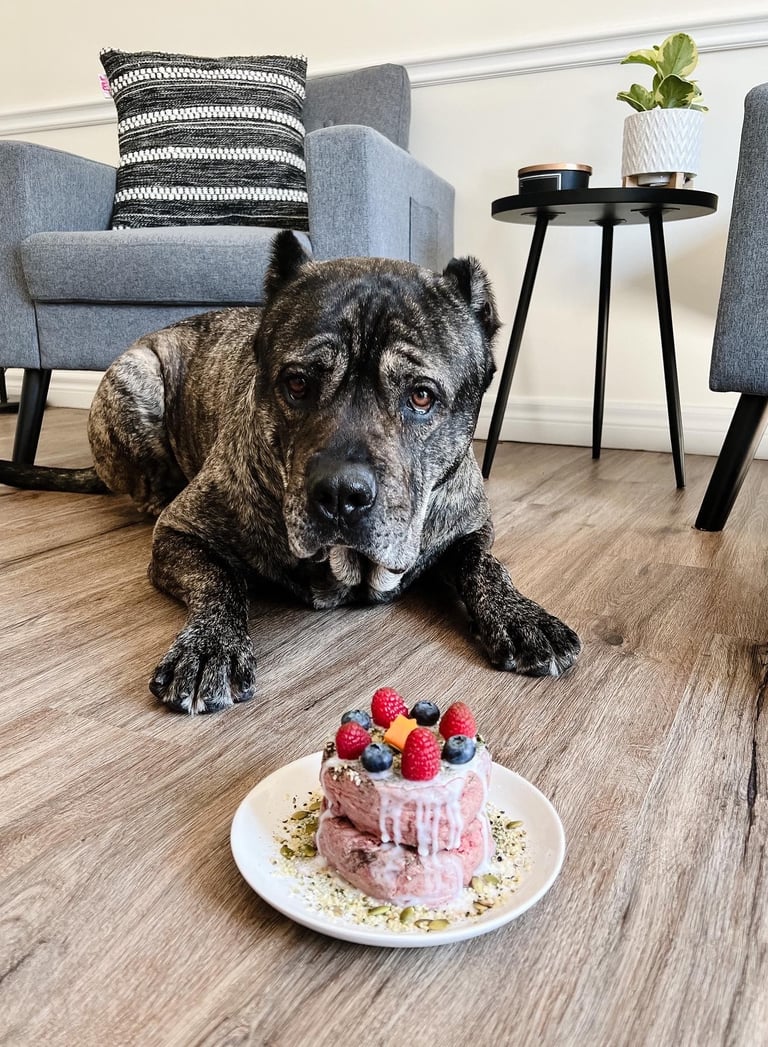
It’s simple, a raw-fed diet is how mother nature intended! The benefits to feeding raw include:
Improved digestion
Less, and more consistent, firmer stool
Strengthens the immune system
Less (or no more!) allergies
More energy
Provides a soft and shiny coat
Whiter teeth, fresher breath
How to Transition Your Dog or Cat to Raw Food
ADR believes in transitioning to raw in a way that will properly support gut health and set your canine or feline companion up for success.
If you currently feed kibble, you can transition to raw either cold-turkey or gradually by mixing it in with your kibble. You’ll know the transition is going well by the consistency of your pet’s stool.
Many pet parents blend kibble and raw to find the perfect balance of convenience and nutrition. We offer various kibble brands as well, making it easy to feed better no matter your routine!
Raw Feeding Transition Phases: Step by Step
Check out our recommended transition phases below.
Basic Blend
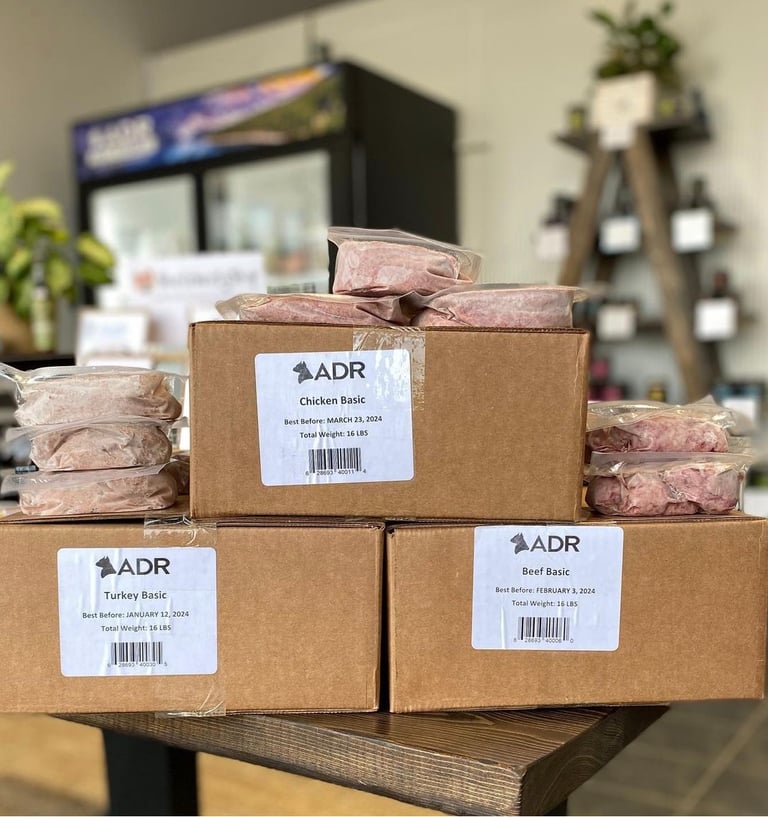
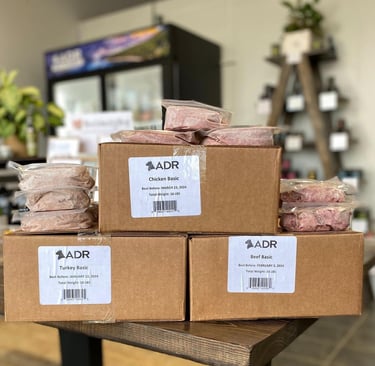
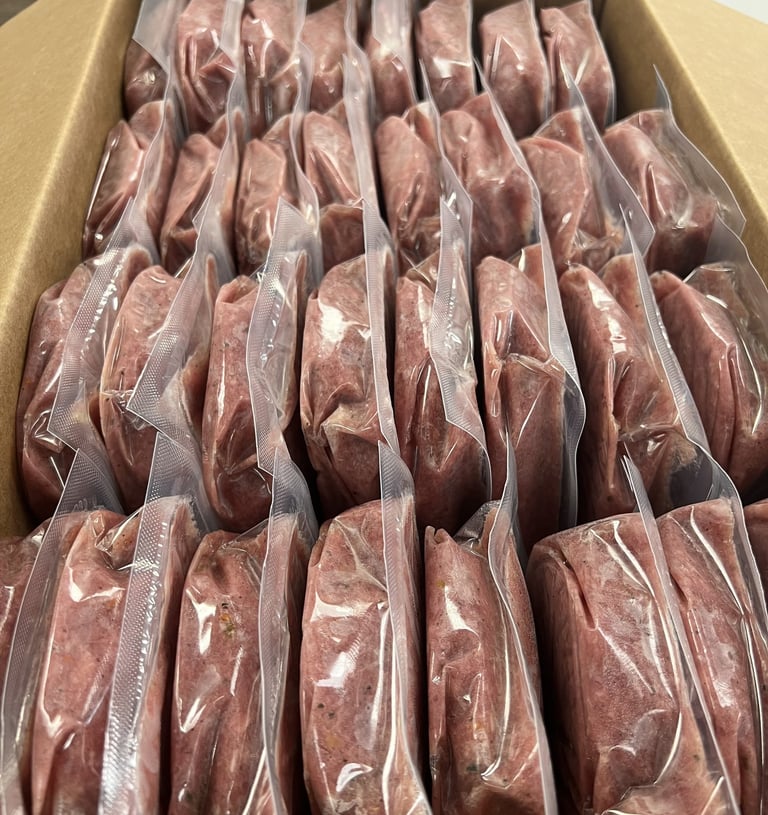
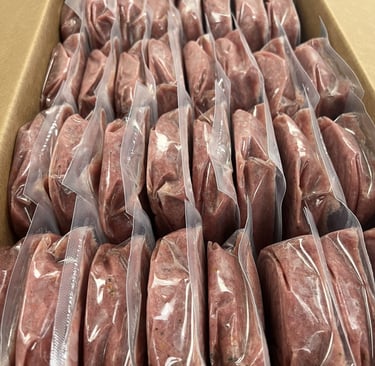
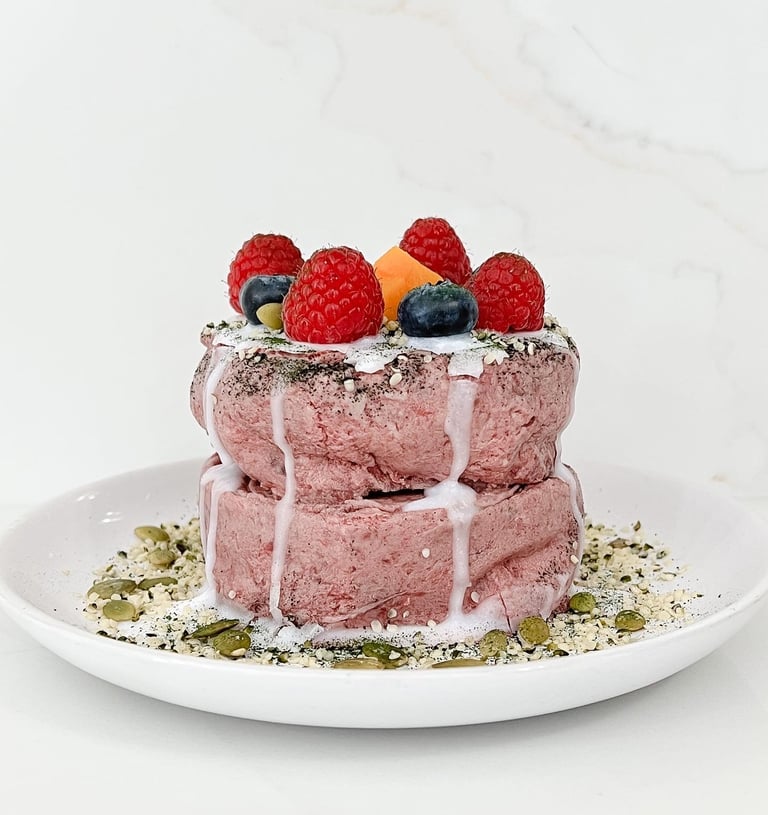

Start with a Basic blend (meat, bone) for about 2-4 weeks. ideally this should be poultry.
Dinner Blend
Next, move to our dinner blends (meat, bone, organ). This should be the same protein you used during the basic step.
Red Meat & Toppers
After 2-4 weeks, you can start introducing red meats and additional toppers.
Feeding Calculator
Is Raw Pet Food Safe? Food Safety Guide
Standard food safety and food handling is required when feeding dogs and cats raw. Maintaining clean hygiene and proper storage methods prevents contamination.
Safe Handling
We recommend following the same safety practices that you would for yourself when you bring raw meat into your home. Be sure to wash all surfaces that come in contact with raw food with warm soapy water or vinegar.
Our food goes through a flash-freezing process to ensure any potential bacteria is killed before it is packaged. Storing your pet’s raw food in the freezer until it's time to thaw and serve prevents bacteria growth. Once your pet’s meal has thawed in the refrigerator, portion it and serve. Keep all unused portions in the fridge in a sealed container for up to 2-3 days.
Avoid leaving your pet’s raw food out for long periods of time, as this can allow bacteria or harmful pathogens to grow. Bacteria can actually start growing at 4°C, and can grow quite rapidly.
Salmonella
Salmonella can only survive in higher pH conditions (4-8+) and requires at least 12 hours to reach incubation. The hydrochloric acid in a carnivore’s stomach is a protective enzyme against pathogens.
Dogs and cats have a highly acidic stomach (about a pH 1) while their digestive system is short and lacks complexity. Bacteria is killed when ingested and passed within 4-6 hours as waste. Since the time to complete digestion is very short, the bacteria does not stay in the body for long.


Feeding Raw Food to Cats
What You Need to Know
Cats are obligate carnivores, which means they must eat meat to survive. Cats do not need fruits, vegetables or carbs in their diet, but do require organ. Cats thrive on high-protein, high-moisture diets rich in substances found in meat such as amino acids, fatty acids, and other vitamins and minerals.


Our best options for cats are any of our Dinners blends (meat, bone, organ, heart).
It is generally recommended that you feed between 2% and 4% of your cat’s ideal bodyweight, split into two or three meals a day.
Every cat is different though, so when determining how much raw food to feed your cat you need to take into account factors such as:
Age
Current Weight
Appetite
Metabolism
Activity and Exercise Levels
If your cat has normal activity levels OR you want to maintain their current weight, 3% of their bodyweight is a good place to start.
If you choose to feed your cat a raw diet, we suggest that you consult with a vet nutritionist to ensure the diet is balanced and complete.
Frequently asked questions
Q: Is raw pet food safe for dogs?
Yes, raw food is safe for dogs when handled correctly. Our raw blends go through a flash-freezing process that eliminates potential bacteria before packaging. Dogs have a highly acidic stomach (around pH 1) and a short digestive tract specifically designed to handle raw meat. Bacteria like Salmonella can only survive in higher pH conditions and are killed by stomach acid before they can cause harm. Follow standard raw meat handling practices, wash surfaces with warm soapy water, store unused portions in a sealed container in the fridge for up to 2–3 days, and avoid leaving food out for long periods. For more detail, see our food safety section above.
Q: Is raw pet food safe for cats?
Yes. Cats are obligate carnivores, they are biologically designed to eat raw meat. A raw diet of muscle meat, bone, and organ closely mirrors what cats eat in the wild. Like dogs, cats have highly acidic stomach acid that neutralizes pathogens in raw meat. Our ADR Dinner blends (meat, bone, organ, heart) are well-suited to cats. We recommend consulting with a vet nutritionist to ensure your cat's diet is complete and balanced, especially if your cat has a health condition.
Q: How do I transition my dog from kibble to raw?
The most common approach is to start with a single-protein Basic blend (meat and bone only — ideally poultry like chicken or turkey) for 2–4 weeks. This gives your dog's digestive system time to adjust. Once their stool is firm and consistent, move to a Dinner blend (meat, bone, and organ) using the same protein. After another 2–4 weeks, you can begin introducing red meats and toppers. You can also transition gradually by replacing a percentage of kibble with raw and increasing the raw portion over time. Our staff can walk you through the right approach for your dog's age, size, and health history, no appointment needed.
Q: Can I mix raw food and kibble?
Yes. Many pet owners feed a mix of raw and kibble, and it's a great way to improve nutrition without committing fully to raw. There's a common myth that you shouldn't mix the two because they digest at different speeds, but for most healthy dogs, this isn't a problem in practice. If your dog has a sensitive stomach, we recommend keeping the two separate (raw in the morning, kibble in the evening) to be safe. Our staff can help you find the right ratio for your pet.
Q: How much raw food should I feed my dog?
A general starting point is 2–3% of your dog's ideal body weight per day. A 30lb dog would eat roughly 0.6–0.9lbs per day. Active dogs, puppies, and underweight dogs typically need more (closer to 3%), while senior or less active dogs may do well at 2% or slightly less. Use our feeding calculator on this page to get a personalized estimate, or ask our staff in-store, they calculate this every day and can factor in your dog's breed, age, and activity level.
Q: How much raw food should I feed my cat?
Start at 3% of your cat's ideal body weight per day, split into two or three meals. A 10lb cat would eat roughly 0.3lbs (about 135g) per day. Adjust based on your cat's appetite, activity level, age, and metabolism. Kittens and very active cats may need more; senior or less active cats may need less. If your cat is significantly overweight or underweight, consult with a vet nutritionist for a tailored plan.
Q: My dog has a sensitive stomach, can they eat raw food?
Raw feeding is often a great option for dogs with sensitive stomachs, because it eliminates the fillers, artificial additives, and low-quality proteins found in many commercial foods that can trigger digestive upset. We recommend starting with a single-protein Basic blend (chicken/turkey is usually the most gentle) and transitioning slowly. If your dog has a diagnosed food allergy or inflammatory bowel condition, our CPCN-certified staff can help you identify the right proteins and feeding plan. Come in-store and ask, we handle this question every day.
Q: Can puppies eat raw food?
Yes. Puppies can be started on raw food from weaning, and many breeders raise puppies on raw from day one. For puppies transitioning from kibble, most can start right on dinners with organs, or start with a single-protein basic blend and transition gradually over 2–4 weeks. Puppies have higher energy and growth needs, so feeding amounts are higher — typically 5–10% of body weight per day for very young puppies, decreasing as they grow. Our staff can help you build a feeding plan appropriate for your puppy's age, breed size, and growth stage.
Q: Can senior dogs eat raw food?
Absolutely. Many senior dogs actually thrive on raw food, the high moisture content supports kidney health, and the clean ingredients are easier on aging digestive systems. Senior dogs are often fed at the lower end of the range (around 2% of body weight) and may benefit from softer blends or added joint supplements like fish oil. If your senior dog has a health condition, our CPCN-certified staff can help you choose the right blend and supplements to support their specific needs.
Q: What proteins do you carry for raw feeding?
Our ADR house blends cover: chicken, beef, turkey, lamb, duck, salmon, pork, and rabbit. We also carry multi-protein blends like Surf & Turf (beef, turkey, salmon), Farm & Stream (beef, lamb, salmon), and Triple Mix (beef, chicken, turkey). Third-party brands like Big Country Raw, Raw Performance, Healthy Paws, and Totally Raw add further variety.
Q: Do you sell raw food frozen?
Yes, all raw food at ADR is sold frozen. Thaw your pet's portion in the refrigerator the night before serving. Once thawed, keep unused portions in a sealed container in the fridge for up to 2–3 days. Do not refreeze thawed raw food.
Support & Education
Start Here
Feeding Calculator
Pet Parent Hub
Raw & Unleashed Blog
ADR Pet Stores Inc.
Head Office: Keswick, Ontario
Email: info@adrpack.ca
© 2026 ADR Pet Stores Inc. All rights reserved.
Services
Nutrition Consultations (CPCN)
Grooming (Caledon)
DIY Dog Wash Station (Orillia)
Birthday Cakes & Parties (participating locations)